
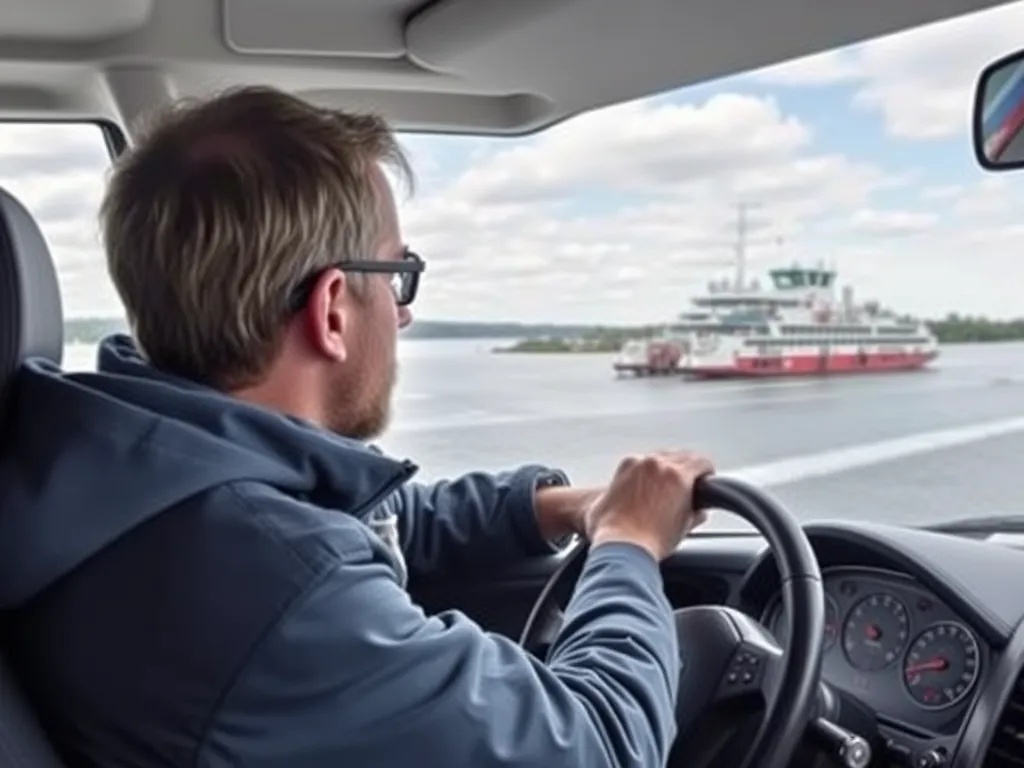
Ferry crossings significantly expand the possibilities for road travelers, allowing them to overcome water obstacles and considerably shorten routes. For Russian motorists planning a trip using ferries, especially to European destinations, it is important to familiarize themselves in advance with the main rules and features of such transportation. This guide will help you prepare for the trip and avoid unpleasant surprises along the way.
Preparing for a Ferry Trip
A successful road trip using ferries begins with proper preparation and planning. This is especially important for Russian drivers traveling abroad.
Choosing a Ferry Company and Booking Tickets
Booking ferry tickets with a vehicle is significantly different from purchasing a standard passenger ticket:
- Book in advance – the earlier you purchase a ticket, the better the price, especially during peak tourist season
- When booking, provide the exact dimensions of your vehicle (length, width, height), including any additional elements (roof racks, bike mounts)
- Remember that the price depends on the size of the vehicle – the larger the vehicle, the more expensive the transport
- For international routes (e.g., DFDS, Viking Line, Stena Line), it is recommended to book tickets through the carrier’s official website
- Keep your booking confirmation – it will be required when boarding the ferry
Required Travel Documents
For a smooth journey, prepare a complete set of documents:
- Passport with a valid visa (if required)
- International driver’s license
- Vehicle registration certificate
- Insurance policy (international “Green Card” is mandatory)
- Printed ticket or ferry booking confirmation
- Documents for transported pets (if traveling with animals)
Port Procedures and Vehicle Boarding Rules
Arrival at the port and loading your vehicle onto the ferry have specific procedures that Russian drivers need to be aware of, especially if using a ferry for the first time.
Arrival at the Departure Port
Timely arrival at the port is key to successful boarding:
- Arrive at the port at least 1–2 hours before departure (for small ferry lines) or 2–3 hours (for international routes)
- Study the port layout carefully – there are usually special waiting areas for vehicles
- In large ports, a buffer zone may be organized where you must leave your car before completing documentation
- Follow the instructions of port staff and information boards
- Keep in mind that emergency and special service vehicles have priority boarding

Vehicle Boarding Process
Boarding vehicles onto a ferry is a strictly regulated process:
- Passengers should exit the vehicle – they usually go to the passenger decks separately
- Follow the ferry staff’s instructions regarding parking – they determine the parking order
- On many ferries, it is customary to drive in reverse and exit forward
- Before leaving the vehicle, ensure that:
- The engine is off
- The parking brake is engaged
- The gear is engaged (for manual transmission) or the selector is in P (for automatic)
- The battery is disconnected (mandatory on some ferries)
- Valuables are taken with you
- The vehicle is locked
Onboard Ferry Rules and Features
Travel time on a ferry can range from a few hours to several days. It is important to know the rules and restrictions to ensure a comfortable trip.
Safety and Conduct Rules
Ferries have special safety regulations:
- It is prohibited to stay in the vehicle while the ferry is moving
- During the entire voyage, follow the captain’s or duty officer’s instructions
- Observe fire safety and sanitary rules
- Handle the carrier’s property with care
- Smoking is prohibited in unauthorized areas
- If you feel unwell, contact the staff – large ferries have medical stations
Access to Your Vehicle During the Voyage
Most ferries have the following rules:
- Access to vehicle decks during ferry movement is restricted or completely prohibited for safety
- On some ferries, access is allowed at specific times under staff supervision
- Take all necessary items with you in advance before going to the passenger deck
- If urgent access to the vehicle is needed, contact the ferry staff
Working and Rest Periods for Professional Drivers
For professional drivers, adhering to work and rest schedules on ferries is particularly important. This is regulated by both Russian law and European standards (AETR and EU Regulation 561/2006).
Recording Ferry Time in the Tachograph
Properly recording ferry crossings in the tachograph has several specifics:



- When boarding and disembarking occur during working hours:
- Record this activity as regular work
- Indicate in the tachograph that it was a ferry/train
- Be aware that the countries for shift start and end may differ
- When regular rest (11 hours) is interrupted for boarding/disembarking:
- Rest may be interrupted no more than twice
- Total interruption time must not exceed 1 hour
- The "ferry/train" function must be activated upon boarding
- The working shift on that day must not exceed 13 hours
Rest Rules on the Ferry
When using ferry time as a rest period, follow these requirements:
- Daily rest on the ferry must be at least 11 hours
- Split rest periods (3+9 hours) are allowed
- The driver must have access to a sleeping area or cabin during rest
- Daily rest completion rules within 24 hours of starting the shift remain in force
- For regular weekly rest, the period spent on the ferry must be at least 8 hours
- Keep ferry tickets for inspection by authorities

Disembarking and Continuing the Journey
The final stage of a ferry crossing also requires attention and adherence to certain rules.
Disembarking Process
Unloading vehicles from the ferry has specific procedures:
- Vehicle unloading begins only after passengers have disembarked
- Return to your vehicle when announced via the ship’s public address system
- Follow the ferry staff’s instructions regarding the order of exit
- Check the vehicle’s functionality before starting the engine
- Maintain safe distance and speed when leaving the ferry
Planning the Next Leg of Your Route
After the ferry crossing, consider the following factors when planning your onward journey:
- Study the route from the arrival port to your next destination in advance
- Take into account traffic rules in the destination country (right-/left-hand traffic, speed limits)
- Check fuel availability – refueling stations may not be close to the port
- For long crossings, plan the first stop for rest due to potential fatigue
- Have a backup plan in case of ferry delays or cancellations due to weather
Features of International Ferry Routes
Russian drivers traveling on international routes should take into account the specifics of different destinations.
Popular Routes for Russian Drivers
Among popular ferry routes for Russian motorists are:
- Baltic Sea routes:
- Saint Petersburg – Helsinki (Finland)
- Saint Petersburg – Stockholm (Sweden)
- Klaipeda (Lithuania) – Kiel/Carlsberg (Germany/Sweden)
- Tallinn (Estonia) – Helsinki (Finland)
- Black Sea routes:
- Novorossiysk – Istanbul (Turkey)
- Sochi – Trabzon (Turkey)
- Caucasus – Kerch (domestic Russian route)
- Far East routes:
- Vladivostok – Donghae (South Korea)
- Korsakov – Wakkanai (Japan)
Customs Control Specifics
For international ferry crossings, pay special attention to customs formalities:
- Prepare all documents for customs and border control
- Familiarize yourself with import restrictions of the destination country (including limits on alcohol, tobacco, and currency)
- When taking your vehicle outside the EAEU, it is recommended to complete a customs declaration
- Be aware that customs checks on some routes can take a considerable time
- If traveling with pets, have a complete set of veterinary documents
Practical Tips for Ferry Travel
Finally, here are some practical recommendations to make your ferry trip safer and more comfortable.
What to Take on the Trip
Essential items for a road trip using ferries:
- Basic tool kit and spare parts for the vehicle
- First aid kit (including remedies for motion sickness)
- Necessary medications if taken regularly
- Portable phone charger
- Spare clothing and personal hygiene items
- Small supply of drinking water and snacks
- Documents and money in waterproof packaging
- Sunscreen (especially in summer)
Travel Safety
Ensuring safety is a top priority during a road trip:
- Perform vehicle maintenance before the trip
- Follow work and rest schedules – do not drive when fatigued
- For long drives, take breaks every 2–3 hours
- Learn the main traffic rules of the countries along your route
- Keep contact information for Russian consulates in destination countries
- Download offline maps for areas with no mobile signal
- Be prepared for changing weather conditions – the sea can be unpredictable
By following all the above rules and recommendations, you can make your road trip using ferries safe, comfortable, and unforgettable. Safe travels!